Introduction: Why Blog Commenting Still Matters
Have you ever wondered if commenting on blogs really makes a difference in SEO? In today’s fast-paced digital marketing world, blog commenting is often underestimated—but it remains one of the simplest and most effective ways to build visibility, credibility, and connections online.
While it may seem like a small action, a thoughtful comment can drive targeted traffic, strengthen your authority, and play a meaningful role in boosting your off-page SEO.

Blog commenting isn’t just about dropping a link and walking away. It’s about engaging with real people, adding value to conversations, and positioning yourself as someone worth paying attention to. When done right, it helps you build relationships with bloggers, opens the door to collaborations, and establishes your presence in your niche.
But how do you craft comments that actually stand out?
Where should you focus your efforts to get maximum impact? And how can you turn simple comments into long-term digital advantages?
Let’s explore the true power of blog commenting and how you can make it a smart, strategic part of your digital marketing toolkit.
What is Blog Commenting? – Basics Explained
At its core, blog commenting is leaving feedback or thoughts on a blog post. But in the context of SEO, it’s more than just a casual remark.
Blog commenting can help:
- Build relationships with bloggers and influencers
- Drive referral traffic to your website
- Enhance your authority in a niche
- Improve off page SEO through backlinks and mentions

But not all comments are equal. The goal is to provide value, demonstrate expertise, and engage in a meaningful way rather than just dropping a link.
How to Engage Effectively in Blog Commenting
Do you want your comments to be read and appreciated? Effective engagement is key. Here’s how:
1. Read the Post Carefully
Would you respond to a post without understanding it? Avoid shallow comments. Highlight key points or share personal experiences.
2. Be Relevant and Specific
Generic comments like “Great post!” don’t add value. Instead:
- Ask a thoughtful question
- Add additional insights or resources
- Share your perspective on the topic
3. Keep It Professional and Polite
How would you feel about a rude or spammy comment? Always maintain professionalism. Respect differing opinions and provide constructive input.
4. Use Your Real Name and Profile
Would you trust a comment from “123User”? Authenticity builds credibility. Use your real name and link to your website or profile.
5. Focus on Quality Over Quantity
Do you need to comment everywhere? No. Target blogs where your contribution matters. One well-thought-out comment can have more impact than 50 superficial ones.
Where to Find Relevant Blogs for Commenting
Finding the right blogs is half the battle. How do you ensure your comments reach the right audience?
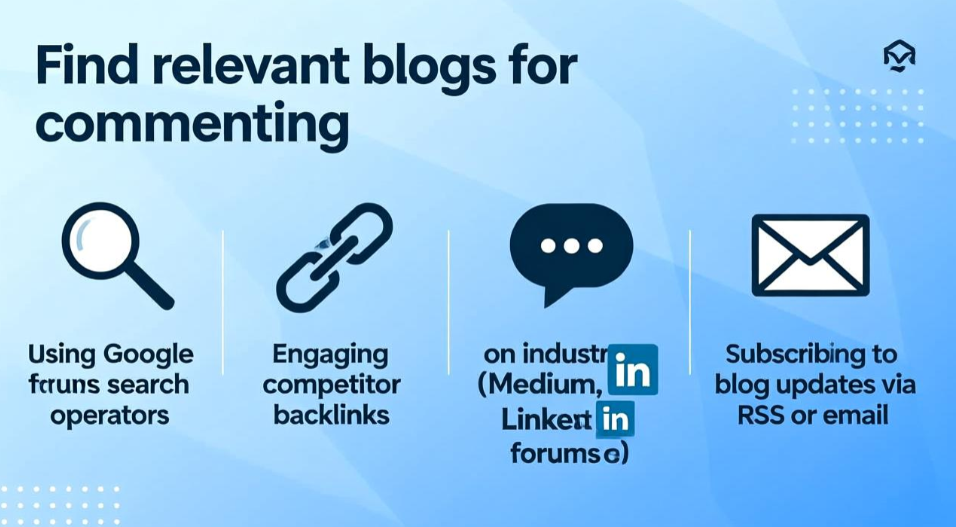
1. Use Google Search Operators
Search queries like:
- “Your niche” + blog
- “Your keyword” + “leave a comment”
This helps you locate blogs relevant to your industry.
2. Check Competitor Backlinks
Where are your competitors commenting or guest posting? Tools like Ahrefs or SEMrush can reveal these opportunities.
3. Engage on Industry Forums and Communities
Do forums count as blogs? Some do! Platforms like Medium, LinkedIn Articles, or niche forums allow commenting and can drive traffic.
4. Subscribe to Blog Updates
Use RSS feeds or newsletters to keep up with new posts in your niche. This ensures you comment on fresh content before others do.
Types of Comments That Add Value
Not all comments are created equal. Which ones enhance your credibility and help SEO?
1. Insightful Comments
Share additional information or examples that complement the post. Example:
“Great explanation of SEO basics! In my experience, adding structured data can further improve rankings, especially for local searches.”
2. Questions and Clarifications
Asking thoughtful questions can spark discussions:
“You mentioned link building as a strategy—do you have tips for acquiring high-quality links without guest posting?”
3. Personal Experience
Sharing your experience builds trust and engagement:
“I tried a similar approach last year and saw a 40% increase in referral traffic. Thanks for highlighting these strategies!”
4. Resource Sharing
Provide helpful resources, articles, or tools that support the topic:
“For those interested in keyword research, I found Ubersuggest very helpful in addition to Ahrefs.”
5. Appreciative Yet Relevant Feedback
Compliment the content while adding value:
“This is an excellent post on blog commenting! I especially liked the point about avoiding spammy links—it’s crucial for maintaining authority.”
How Blog Commenting Supports SEO and Digital Marketing
Do blog comments really help SEO? While the direct ranking impact is debated, the indirect benefits are significant:
- Referral Traffic: Visitors click through your profile or website link.
- Backlink Opportunities: Some blogs allow do-follow links in comments.
- Relationship Building: Engaging with influencers can lead to guest posts or collaborations.
- Brand Authority: Thoughtful comments position you as an expert in your niche.
- Off Page SEO Signals: High-quality engagement indicates activity and relevance in your industry.
Think of commenting as a bridge—it connects you to potential readers, partners, and customers.
Tips to Maximize Blog Commenting ROI
How can you ensure your efforts pay off?

- Be Strategic: Target blogs with high authority and relevant audiences.
- Track Engagement: Monitor traffic coming from your comment links.
- Be Consistent: Regular commenting maintains visibility in your niche.
- Repurpose Insights: Some comments can evolve into blog posts or social media content.
- Follow Up: Respond to replies to keep the conversation going.
Common Blog Commenting Mistakes to Avoid
Ever wondered why some comments don’t work? Avoid:
- Spamming Links: Leaving links without context can harm credibility.
- Being Generic: “Nice post!” adds no value.
- Ignoring the Topic: Off-topic comments look unprofessional.
- Neglecting Follow-Up: Not responding to replies misses engagement opportunities.
- Over-Promotion: Commenting purely for backlinks can hurt reputation.
FAQs About Blog Commenting
- What is blog commenting?
Blog commenting is leaving feedback, thoughts, or questions on a blog post, often including a link to your website or profile. - Does blog commenting help SEO?
Indirectly. While most comment links are no-follow, they can drive referral traffic, build authority, and create opportunities for collaboration. - How do I find blogs to comment on?
Use Google search operators, competitor backlink analysis, industry forums, and RSS subscriptions. - What type of comments are most effective?
Insightful, specific, and relevant comments that add value to the conversation. - How often should I comment?
Consistency matters more than volume. Focus on quality comments on high-authority blogs regularly. - How does DSOM Dehradun help you improve blog commenting skills?
DSOM provides practical training in Off-Page SEO, including effective blog commenting strategies, helping students create valuable comments that build authority and drive traffic.
Conclusion: Is Blog Commenting Still Worth Your Time?
So, is blog commenting still relevant in 2025? Absolutely. While not a primary SEO tactic, it supports digital marketing, builds authority, and enhances off page SEO through relationships, engagement, and referral traffic.
The real question is: are you commenting strategically or just leaving links? Focus on value, relevance, and consistency—and your blog commenting efforts will pay off.