Introduction: Why Meta Keywords Still Matter in Digital Marketing
Digital marketing is constantly evolving, but one thing never changes: search engines need clear signals to understand your content.
While many marketers assume that they are outdated, the truth is very different.
Google may ignore them, but they still matter for:
- alternative search engines
- internal search systems
- metadata structure
- topic relevance
- content organization
- on-page SEO workflows
Meta keywords remain a powerful tool—especially when used strategically.
What Are Meta Keywords?
Meta keywords are a type of meta data added inside the <head> section of your page. They tell search engines what your page is about by listing your primary and secondary topics.
Example tag: <meta name=”keywords” content=”digital marketing, on-page SEO, SEO strategy”>
Even though Google doesn’t use them for rankings anymore, they still add SEO value through improved structure, clarity, and internal search performance.
Types of Meta Keywords
To use meta keywords effectively, you must understand the different types.
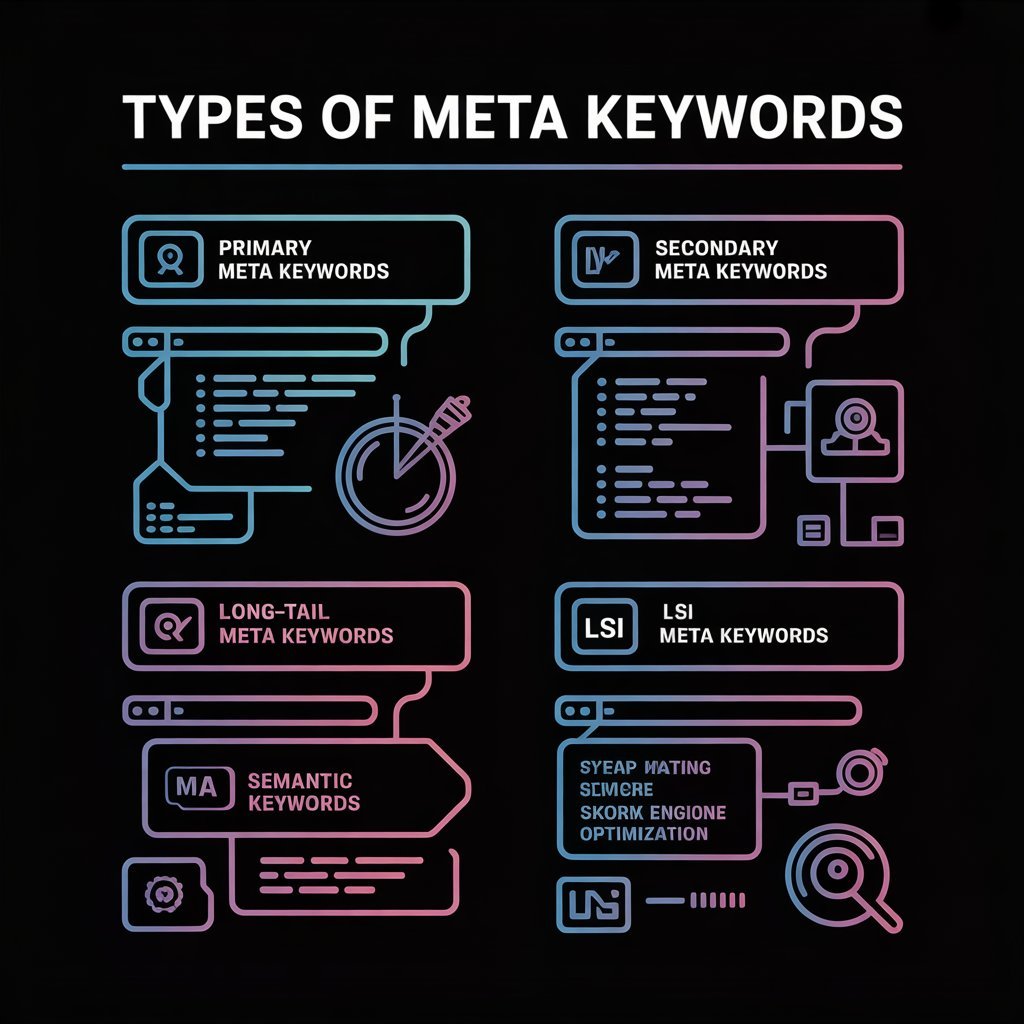
1. Primary Meta Keywords
These are your main focus keywords.
Examples:
- digital marketing
- on-page SEO
Use only 1–3 per page.
2. Secondary Meta Keywords
These support your primary keywords and add context.
Examples:
- SEO keyword list
- SEO optimization
- Keyword selection strategy
3. Long-Tail Meta Keywords
These attract highly targeted traffic.
Examples:
- on-page SEO setup
4. LSI (Semantic) Keywords
These help search engines understand the depth of your content.
Examples:
- search engine optimization
- metadata
- keyword intent
Each type contributes to cleaner, more organized digital marketing.
How to Choose the Right Meta Keywords
Proper selection is the foundation of effective on-page SEO.
Here’s a simple but powerful framework.
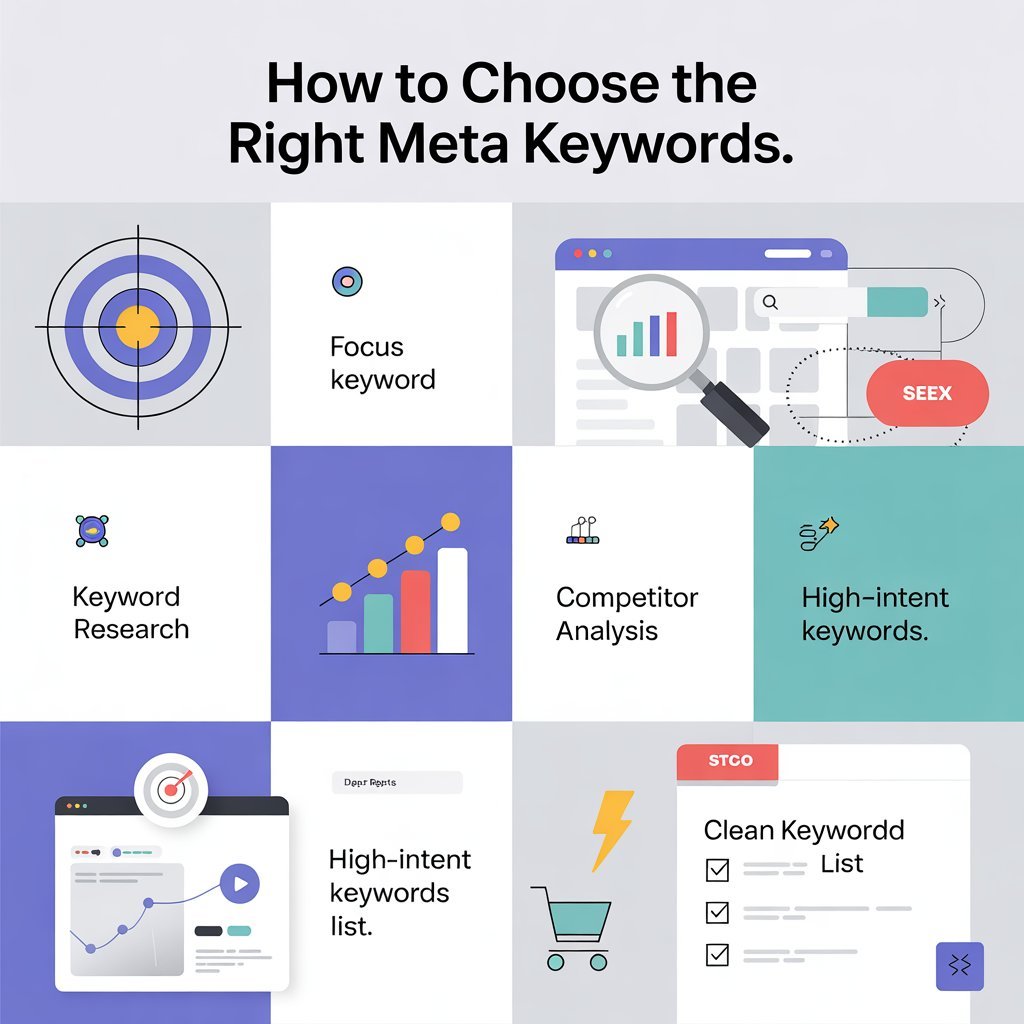
1. Start With Your Focus Keyword
Your main target keyword—in this case, digital marketing—should guide your entire keyword strategy.
2. Perform Deep Keyword Research
Use tools like:
- Google Keyword Planner
- Ahrefs
- SEMrush
- SerpSuggest
Look for keywords with:
- strong relevance
- clear search intent
- good search volume
3. Analyse Competitor Keyword Patterns
Competitors help you understand:
- common keyword themes
- industry language
- keyword gaps you can fill
4. Choose High-Intent Keywords
High-intent keywords attract visitors who are ready to read, learn, or buy.
Examples:
- what is on-page SEO
- how to add meta tags
- On-page SEO checklist
5. Keep Your List Clean
Use 5–10 meta keywords max per page.
More than that weakens your SEO focus.
A clean, well-researched keyword list is the backbone of strong digital marketing and structured on-page SEO
Where to Place Meta Keywords for Best Results
Even if Google ignores meta keywords, their placement still impacts your architecture and internal SEO systems.
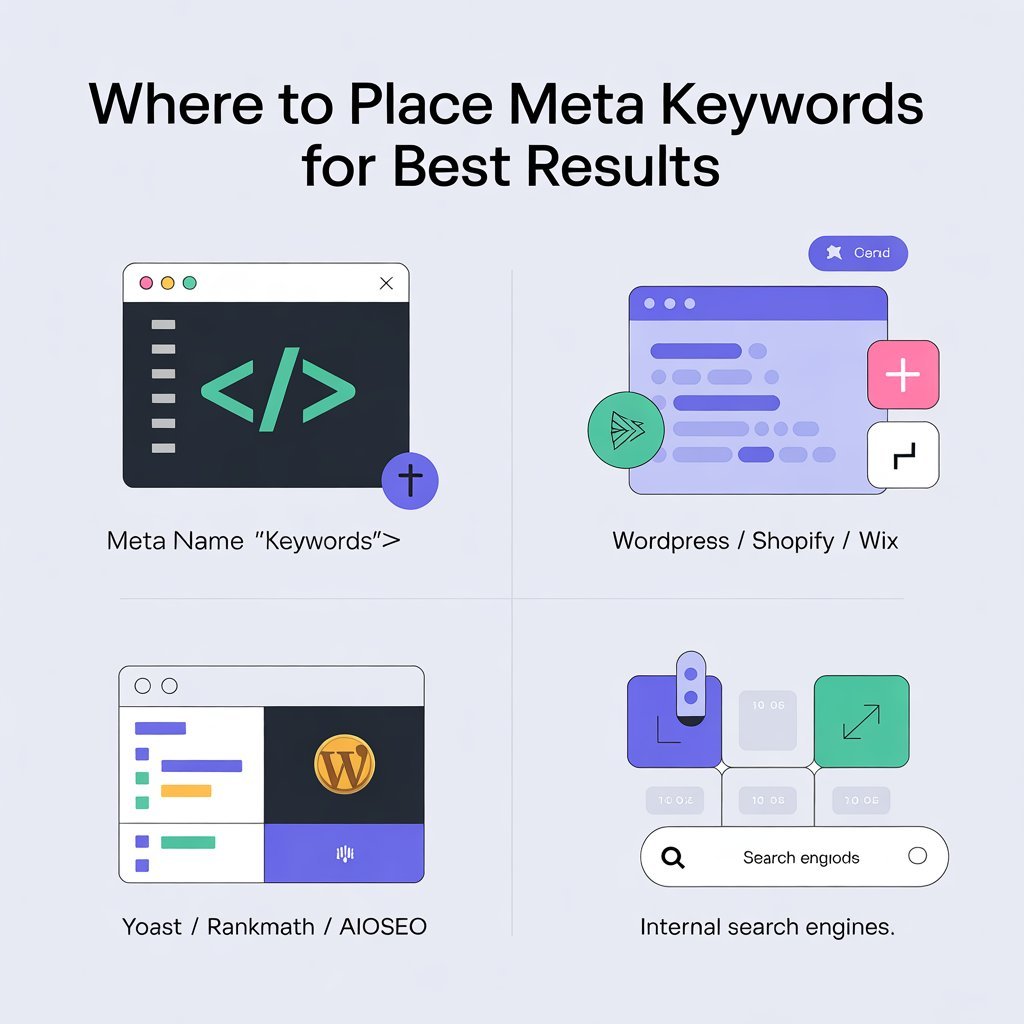
1. HTML <head> Section
The standard location:
<meta name=”keywords” content=”digital marketing, on-page SEO”>
2. CMS SEO Fields (WordPress, Shopify, Wix)
These systems use these keywords to internally to create a clean metadata structure.
3. SEO Plugins (Yoast, RankMath, AIOSEO)
These plugins store these keywords to guide their SEO scoring and content suggestions.
4. Internal Search Engines
Meta keywords help platform search systems show accurate results, especially for:
- blogs
- courses
- stores
- portals
This improves user experience dramatically.
7 Smart Ways Meta Keywords Strengthen Your Digital Marketing Performance
Now that you understand what meta keywords are and how to choose and place them, let’s explore the real impact they can create.
1. They Improve Internal Search Accuracy
Internal search systems—like those used on ecommerce stores, LMS platforms, news sites, and blogs—use them to return better search results.
Better results = longer engagement = stronger SEO signals.
2. They Strengthen Topic Relevance
They tell search systems what core topics your page covers.
This increases semantic clarity and search engine understanding.
Topic clarity is a major ranking factor in modern digital marketing.
3. They Support On-Page SEO Structure
They act as an internal blueprint for:
- writers
- SEO teams
- developers
- content managers
This ensures every page stays aligned with your keyword strategy.
4. They Enhance Website Organization
Large websites—especially with hundreds of pages—use meta keywords to:
- group content
- categorize articles
- define topic clusters
- maintain consistency
This boosts overall crawl efficiency.
5. They Improve Global SEO Beyond Google
Meta keywords still work on:
- Yandex
- Baidu
- Naver
- certain regional search engines
This matters for businesses targeting global audiences.
6. They Strengthen Keyword Clusters
Keyword clustering is essential for modern digital marketing.
They define:
- the primary cluster
- supporting keywords
- long-tail variations
- page depth
This leads to stronger topical authority.
7. They Create Metadata Consistency Across Pages
Metadata consistency is vital for:
- technical SEO
- large marketing teams
- content scheduling
- multi-page optimization
They act like labels, keeping everything aligned and well-structured.
The Role of Meta Keywords in Modern SEO
While Google doesn’t use them directly, their indirect impact is powerful.
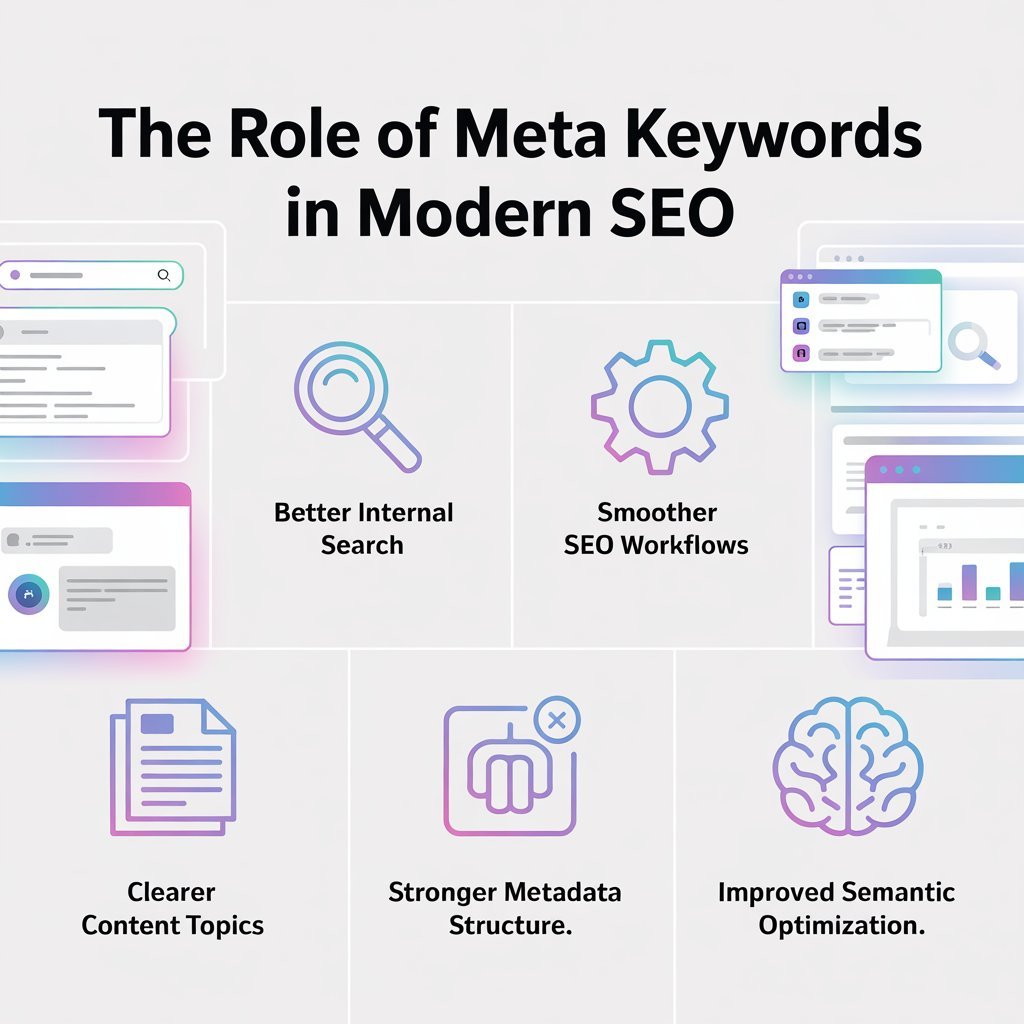
They help in:
- better internal search
- smoother SEO workflows
- clearer content topics
- stronger metadata structure
- improved semantic optimization
Together, these make your digital marketing more efficient.
Final Thoughts
Meta keywords aren’t dead.
They’ve evolved.
When used strategically, they can still supercharge your digital marketing strategy—especially in 2025’s competitive search landscape.
And if you want to master these skills the right way, DSOM Dehradun trains you with real industry techniques to implement powerful on-page SEO and metadata optimization.