Digital Marketing Starts With Meta Tags (The First Thing Google Sees)
Digital marketing begins long before someone lands on your website.
It starts with meta tags—the invisible signals that tell Google and users what your page is about.
If they are weak, vague, or missing, your digital marketing and On-Page SEO fall apart instantly.
But if they are sharp, strategic, and clear, Google rewards you with higher rankings, more clicks, and stronger visibility.
This guide breaks down everything you need to know—without confusion, fluff, or outdated advice.
What Are Meta Tags? (The Backbone of Digital Marketing)
Meta tags are short pieces of HTML code that help search engines understand your page.
They don’t appear on the page itself, but they decide how your page appears in search results.
Think of them as your website’s hidden voice—quiet, but extremely powerful.
In digital marketing, meta tags influence:
- How Google reads your site
- How users choose your result
- How well your page ranks
- How many people click
Without it, your On-Page SEO loses its strength.
Why Meta Tags Matter in Digital Marketing
You compete with thousands of pages.
Users decide in less than a second whether to click you.
They influence:
Ranking Power
Google uses your meta tags to understand your relevance.
Click-Through Rate
Your title and description act like ads for your page.
First Impressions
Users trust pages that look clean, clear, and well-written.
Better User Signals
Accurate meta tags reduce bounce rates by matching search intent.
In short, clear and compelling page information turns fleeting impressions into clicks, engagement, and lasting SEO success
Types of Meta Tags and Their Purposes
Not all meta tags matter equally.
Some boost SEO.
Some boost user experience.
Some do both.
Here are the most important ones.
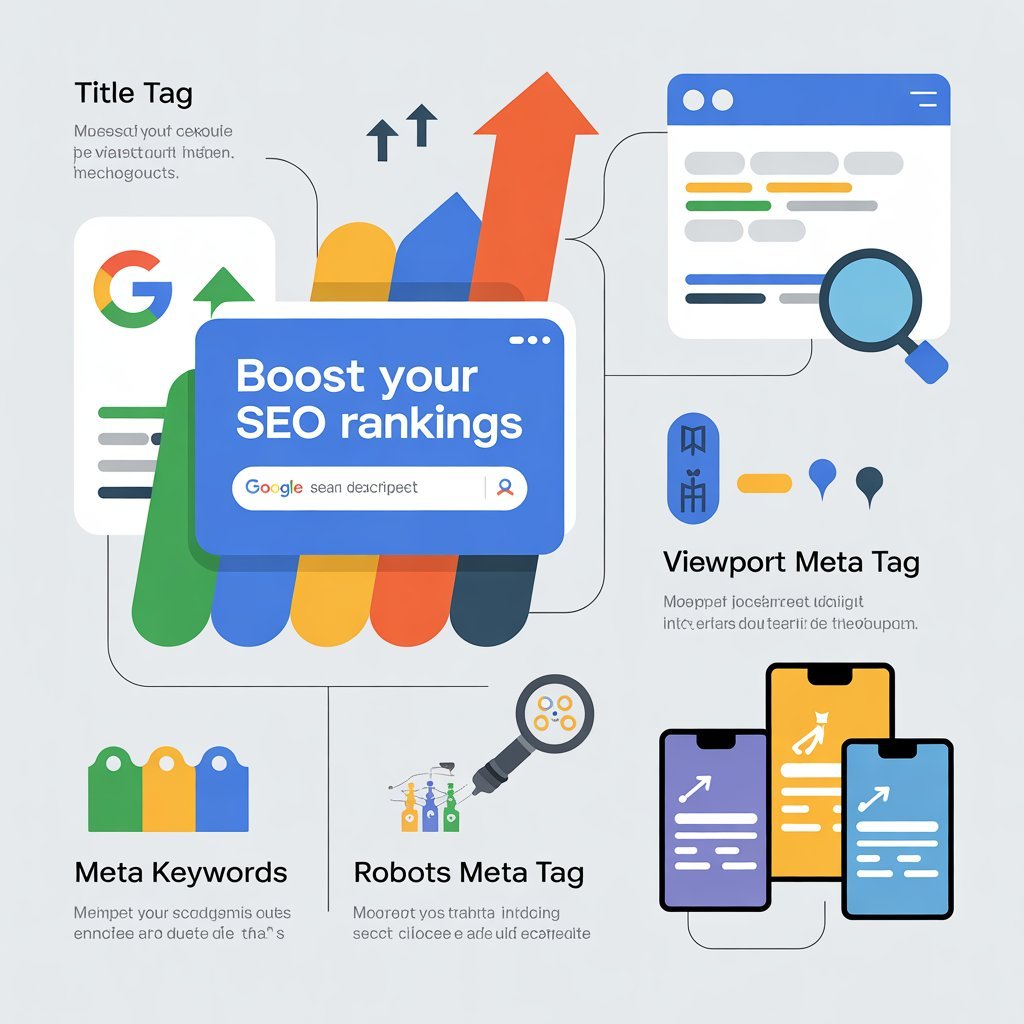
1. Title Tag (The Most Powerful Meta Tag in Digital Marketing)
This is the blue clickable headline on Google.
It affects:
- Rankings
- Clicks
- User expectations
- Relevance signals
A strong title tag = strong search performance.
Example:
Digital Marketing Tips: 10 Proven Ways to Boost Your SEO
2. Meta Description
This appears under your title tag.
It influences:
- Click-through rate
- User interest
- Engagement
It should be:
- Benefit-driven
- Emotional
- Clear
- Actionable
Even though Google rewrites them sometimes, a powerful description always helps.
3. Meta Keywords (Outdated and Ignored)
Google does not use them anymore.
But some alternative search engines still read them.
Use sparingly or skip them completely.
4. Robots Meta Tag
Tell Google what to do with your page.
Examples:
- index / noindex
- follow / nofollow
Useful for controlling what gets seen.
5. Viewport Meta Tag
Helps with mobile responsiveness.
Important for digital marketing because most users browse on mobile.
Mastering these key meta tags ensures your pages rank higher, attract the right audience, and deliver a seamless user experience across all devices
Where Are Meta Tags Important in SEO?
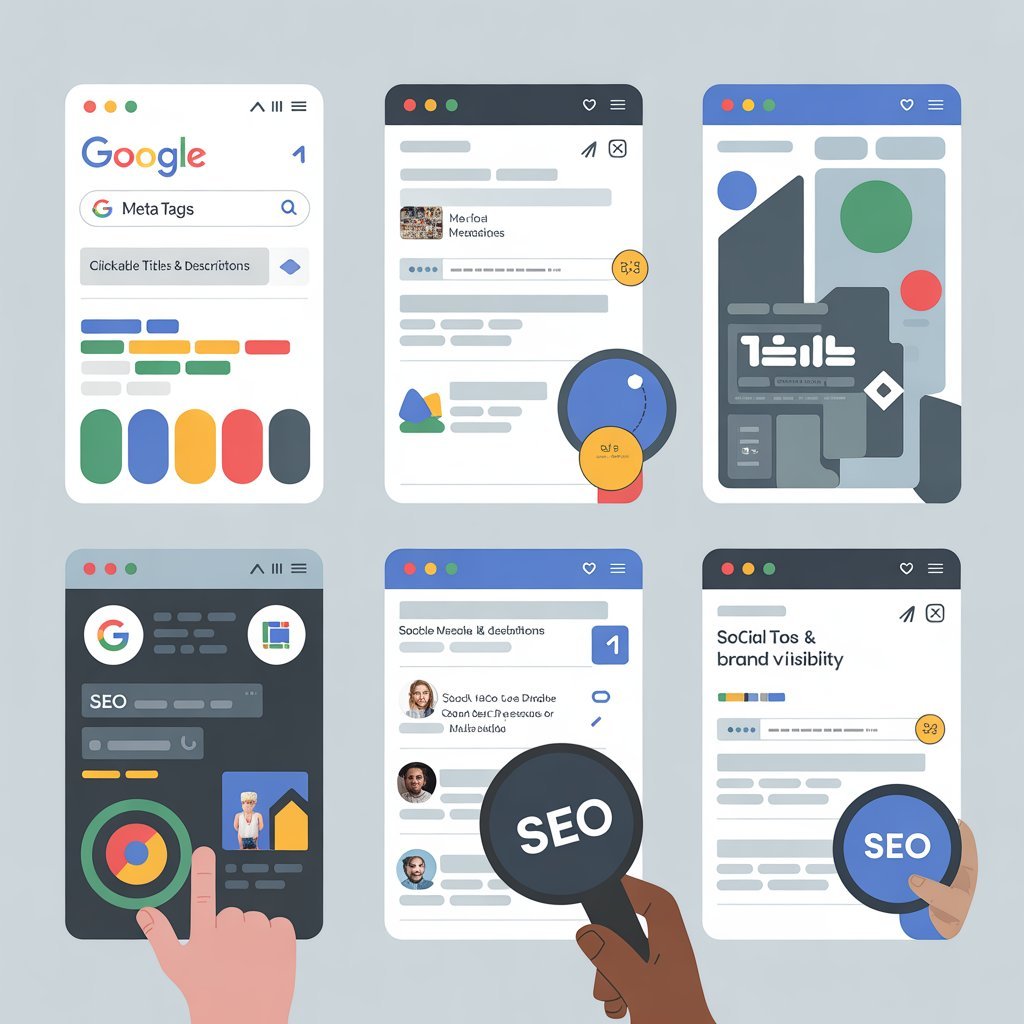
Google Search Results
Your title and description appear as your digital storefront.
Browser Tabs
The title tag helps users identify open pages.
Social Media Shares
Platforms use your meta tags to generate previews.
SEO Tools
Semrush, Ahrefs, Moz—all read your meta tags for audit reports.
No matter where your brand appears online, well-crafted tags ensure clarity, trust, and maximum visibility
How to Write Engaging Meta Tags
Writing tags is not about stuffing keywords.
It’s about:
- Clarity
- Emotion
- Intent
- Value
- Action
Here’s how to create meta tags that actually perform:
1. Start With Your Focus Keyword
Place digital marketing at the beginning of your title and description.
Google values early keywords more.
2. Add a Number (It Boosts CTR Instantly)
Numbers improve structure and readability.
Example:
Digital Marketing: 10 Powerful Ways to Improve On-Page SEO
3. Use at Least One Power Word
Examples:
- Proven
- Ultimate
- Effective
- Powerful
- Instant
Power words trigger emotion and curiosity.
4. Use Positive or Negative Sentiment
People react faster to emotion.
Examples:
- “Best Digital Marketing Tips…”
- “Worst Title Tag Mistakes to Avoid…”
5. Keep It Under 60 Characters
Anything longer gets cut.
6. Make It Benefit-Focused
Tell users what they get.
Instead of:
How to Write a Title Tag
Use:
How to Write Title Tags That Get More Traffic
7. Match Search Intent
If users want information—give it.
If they want solutions—give solutions.
Intent = relevance
Relevance = rankings
8. Avoid Keyword Stuffing
Use the focus keyword naturally, not repeatedly.
Follow these steps, and your meta tags won’t just exist—they’ll attract clicks, engage users, and boost your SEO like never before.
Common Meta Tag Mistakes That Hurt SEO
Avoid these at all costs:
- Writing vague, generic titles
- Missing keywords
- Too long or too short tags
- Not matching search intent
- Repeating the same title tag on multiple pages
- Not using power words
- Keyword stuffing
- Ignoring meta descriptions
- Not updating old tags
These mistakes confuse Google and reduce your visibility.
The Impact of Meta Tags on SEO
Meta tags influence almost every part of your digital marketing performance.
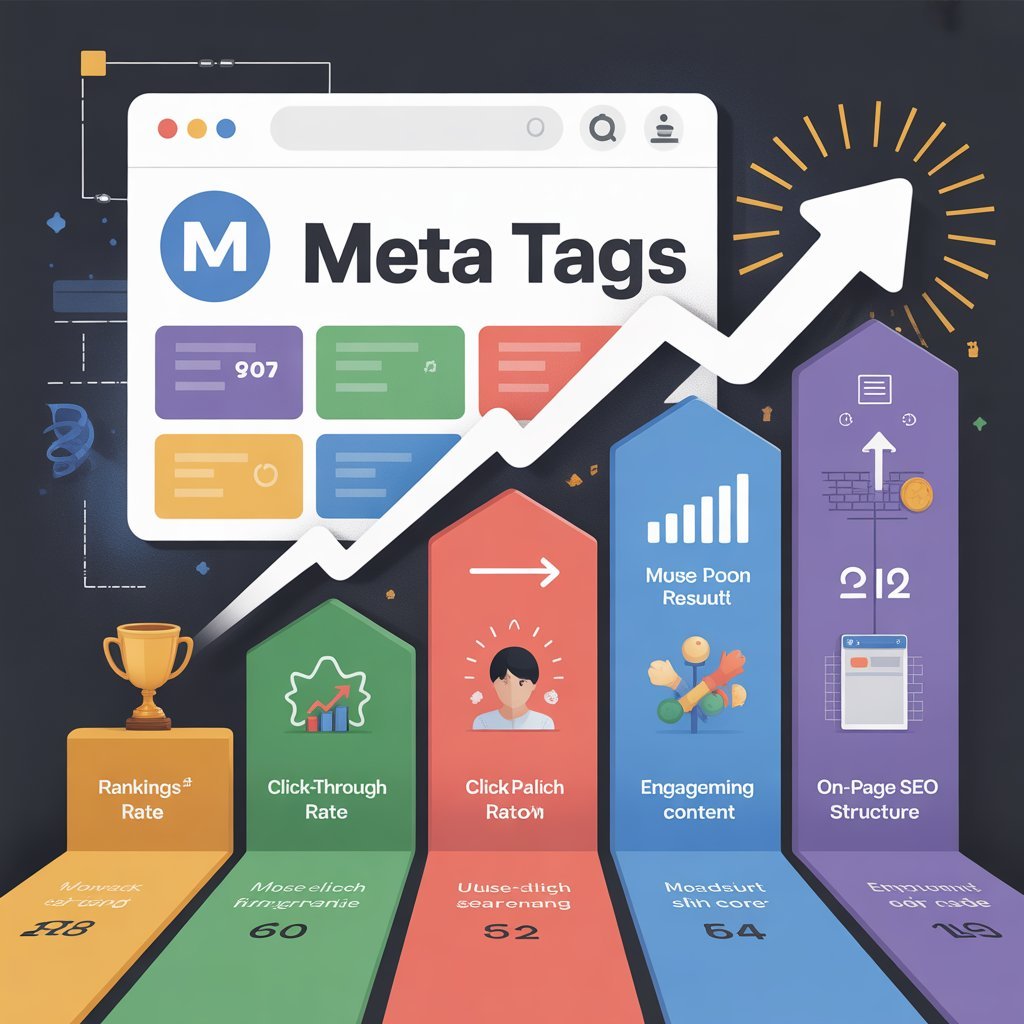
Here’s how:
Improve Rankings
Google understands your page better.
Boost Click-Through Rate
Strong titles attract more clicks.
Raise Engagement
Users stay longer when expectations match.
Lower Bounce Rate
Clear titles attract the right audience.
Strengthen On-Page SEO
Your whole SEO structure becomes cleaner and stronger.
They pack a powerful punch—shaping rankings, clicks, engagement, and overall SEO success.
Final Thoughts: Meta Tags Decide Your Digital Marketing Success
Meta tags are not decoration.
They are strategies.
One strong title tag can increase your visibility.
One sharp meta description can double your clicks.
One optimized approach can boost your entire On-Page SEO.
If you master meta tags, you master search.
And in digital marketing, that’s what wins.
If you want to learn these skills practically—and apply them the right way in real projects—DSOM Dehradun gives you hands-on digital marketing training that turns knowledge into results.