What is Off-Page SEO? – Understanding the Fundamentals
When most people think of SEO, they imagine tweaking titles, optimizing meta tags, or adding keywords – but that’s only half the game.
The real power of SEO comes from what happens outside your website – that’s Off-Page SEO.
In simple terms, Off-Page SEO refers to all the activities you do beyond your website to improve your search engine rankings. It’s how you build your website’s reputation, authority, and trust across the internet.

Search engines like Google look at Off-Page signals to decide if your site deserves to rank higher. Think of it as online word-of-mouth – the more other reputable sites talk about you (through backlinks, mentions, or shares), the more credible your site appears.
Why Off-Page SEO Matters
Here’s the truth:
You can have the best on-page SEO in the world, but without strong Off-Page signals, you’ll rarely reach page one.
Off-Page SEO tells Google three important things:
- Trustworthiness: Are other credible sources linking to you?
- Authority: Are you seen as an expert in your field?
- Popularity: Are people talking about your brand online?
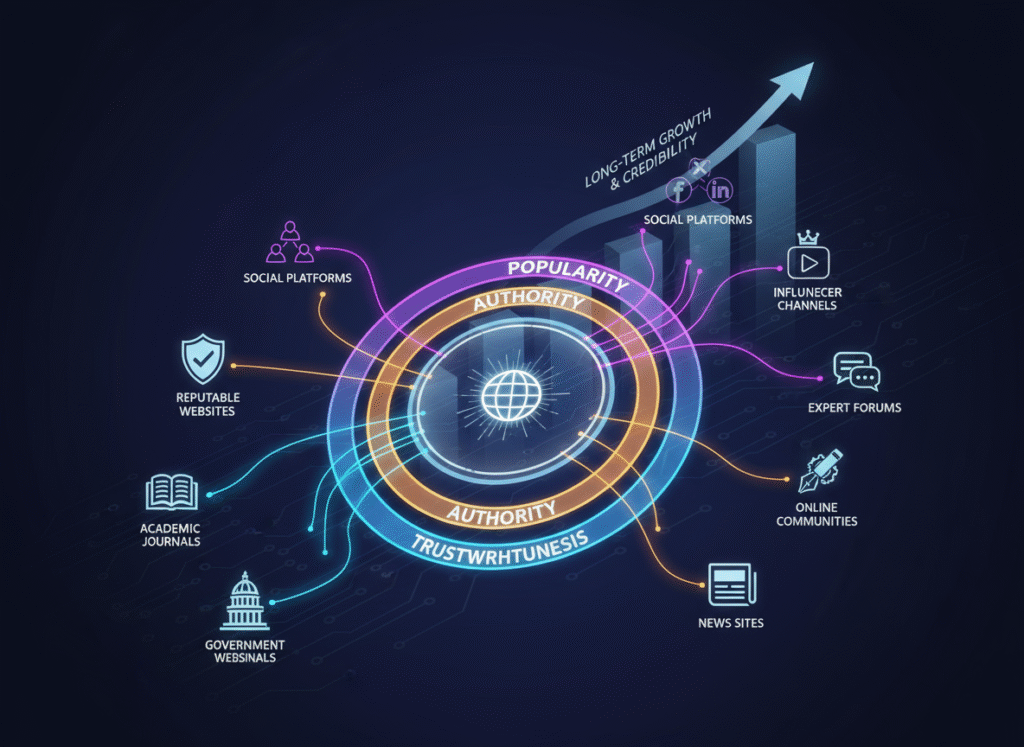
In the world of digital marketing, this makes Off-Page optimization an essential pillar — not just for rankings, but for long-term brand growth and credibility.
Where to Implement Off-Page Techniques – Identifying Key Areas
While on-page SEO focuses on your own website, Off-Page SEO builds your presence elsewhere. Let’s look at the most effective channels for implementing Off-Page strategies.
1. Backlink Sources
Backlinks are still the backbone of Off-Page SEO. When authoritative websites link to your pages, it signals Google that your content is trustworthy and valuable.
Where to get backlinks:
- Guest Blogging: Write high-quality posts for reputable blogs in your niche.
- Business Directories: Submit your website to relevant directories (like Clutch, Justdial, or Google Business Profile).
- Resource Pages: Get listed on curated “best tools” or “useful resources” pages.
- Broken Link Building: Find dead links on authority sites and suggest your relevant page as a replacement.

Pro Tip
Don’t chase quantity.
A single link from a top authority site (like HubSpot or Moz) is worth more than 100 low-quality backlinks.
2. Social Media Platforms
Social media doesn’t directly boost rankings, but it helps you earn brand exposure, engagement, and indirect links.
Key platforms for Off-Page SEO include:
- LinkedIn (for professional credibility)
- Instagram (for brand personality)
- Facebook Groups (for community engagement)
- X/Twitter (for authority sharing)
- Pinterest (for visual traffic)

Each share, mention, or save tells Google your content is popular and relevant – signals that indirectly support your ranking.
3. Forums and Online Communities
Platforms like Reddit, Quora, and niche-specific forums can drive powerful Off-Page results. Engaging genuinely in discussions and linking your resources (where relevant) builds both traffic and authority.

Example:
If you’re into digital marketing, answering SEO-related questions on Quora with detailed insights and linking back to your blog builds credibility and referral traffic.
4. Influencer Collaborations
Influencer marketing has evolved into an essential Off-Page channel.
Partnering with niche influencers – whether on YouTube, LinkedIn, or Instagram – helps your content reach new audiences and increases brand mentions (a key ranking factor).

Tip: Prioritize influencers with trust and engagement, not just big follower counts.
5. Brand Mentions and Citations
Even when someone mentions your brand without linking, Google takes notice.
These unlinked mentions act as trust signals for your site’s reputation.
You can track brand mentions using tools like:
- Google Alerts
- Ahrefs Alerts
- Brand24
The more your brand is mentioned across the web, the stronger your digital footprint becomes.
6. Content Syndication & PR
Republishing your articles or stories on platforms like Medium, LinkedIn Articles, or News sites helps expand visibility.
Press releases on credible news platforms can also boost off-page signals — especially when they include backlinks to your primary pages.
Types of Off-Page SEO Strategies – Exploring Different Approaches
Let’s break down the major Off-Page SEO strategies that can transform your digital marketing game in 2025.

1. Link Building
The classic – and still king of Off-Page SEO.
Link building means getting other websites to link to your pages.
But in 2025, quality and relevance matter more than ever.
Popular techniques:
- Guest posting
- HARO (Help a Reporter Out) for media mentions
- Skyscraper Technique (update and improve existing popular content)
- Podcast Guesting for authority backlinks
- Niche Edits (adding links to existing high-authority articles)
2. Social Media Engagement
Social signals like shares, likes, and comments may not be direct ranking factors, but they amplify your reach. The more people engage with your content, the more likely it is to earn backlinks and organic mentions.
Create “share triggers” – emotionally resonant or highly practical content that people naturally want to share.
3. Local SEO & Citations
For businesses, local visibility is everything.
Citations (mentions of your business name, address, and phone number) on platforms like Google Business Profile, Yelp, and Justdial help your local SEO.
Ensure NAP consistency (Name, Address, Phone number) across all listings to improve trust and ranking.
4. Content Marketing
Content isn’t just for your own website. Publishing valuable, sharable, and insightful content on other platforms builds backlinks, credibility, and visibility.
Formats that work well:
- Data-driven blog posts
- Infographics
- Case studies
- Industry reports
- Interactive tools or templates
5. Influencer & Blogger Outreach
Collaborate with niche influencers and bloggers to review, share, or link to your product, course, or tool.
This strategy merges PR, trust-building, and SEO power – all in one move.
6. Forum & Community Marketing
By offering genuine advice (not spamming links), you position yourself as an expert.
That’s exactly how Backlinko’s founder, Brian Dean, built early authority – by adding value in SEO communities.
7. Video & Podcast SEO
Platforms like YouTube and Spotify are goldmines for Off-Page growth. Optimized video and podcast descriptions with backlinks to your main site can send referral traffic and enhance authority.
How to Evaluate Off-Page SEO Success – Measuring Impact
You’ve implemented your Off-Page strategies – now, how do you know if they’re working?

Here’s how to measure Off-Page SEO performance effectively.
1. Domain Authority (DA) and Domain Rating (DR)
Use tools like Ahrefs, Moz, or SEMrush to track your site’s authority score.
A steady increase means your Off-Page signals are strengthening.
2. Backlink Profile Growth
Analyze:
- Number of referring domains
- Quality of linking sites
- Anchor text distribution
- Lost vs. new links
Tools: Ahrefs, Google Search Console, or Majestic.
3. Organic Traffic
Use Google Analytics and Search Console to track increases in organic visits, keyword rankings, and click-through rates (CTR).
4. Brand Mentions and Social Reach
Measure how often your brand name is mentioned on social media and web platforms.
Use Brand24, Mention, or Google Alerts to track growth over time.
5. Conversion and Referral Traffic
Not all backlinks are created equal – some drive direct traffic that converts.
Track referral visits and conversions in Google Analytics to see which Off-Page sources bring real business value.
The Future of Off-Page SEO in Digital Marketing (2025 and beyond)
Off-Page SEO isn’t just about backlinks anymore – it’s about building a trustworthy brand presence across the web.
As Google evolves, so do ranking signals. Expertise, Authoritativeness, and Trustworthiness (E-E-A-T) now play a bigger role than ever.

So, instead of “link building,” think “relationship building.”
Because SEO today isn’t just about gaming algorithms – it’s about earning credibility, relevance, and loyalty.
Final Thoughts
To master Off-Page SEO, focus on quality, authority, and relationships.
It’s the bridge between your website and the wider digital world – connecting your brand to conversations, communities, and credibility.
In a world where everyone’s optimizing their pages, the brands that win are those that go beyond the website.
Because your website deserves more than visibility – it deserves authority.