Digital Marketing Begins with Smart Directory Submission: A Complete Off-Page SEO Guide
What if I told you that one of the oldest off-page SEO strategies—something almost everyone knows about but very few truly understand—is still one of the most underrated weapons in digital marketing today?
And what if I said that a simple, almost effortless technique called directory submission could quietly strengthen your website’s authority, boost your online visibility, and give your entire digital marketing strategy the powerful push it’s been missing?

Sounds too simple to be effective, right? Yet that’s exactly where most people go wrong.
Yes, directory submission is still relevant in 2025.
But here’s the catch… it only works when you do it strategically—with precision, relevance, and consistency.
So ask yourself:
If search engines love credibility…
If backlinks still influence rankings…
If online visibility still drives business…
Then why wouldn’t a trusted, high-quality directory link matter?
And that brings us to the real question:
What makes directory submission so important in digital marketing in 2025—and why are top SEO experts still using it when so many others ignore it?
Let’s dive deeper and uncover the truth.
What Is Directory Submission in Digital Marketing?
If you’re in the world of digital marketing, you already know that online visibility is everything.
But how do you increase that visibility without burning money on paid ads?
Enter: Directory Submission.
Directory submission is the process of submitting your website to online directories to build high-quality backlinks, increase visibility, and improve off-page SEO.
Think of directories as digital phonebooks.
But instead of listing numbers, they list websites—categorized, niche-based, and geographically sorted.
Why does this matter for digital marketing?
Because Google still respects organized, niche-relevant, spam-free directories.
And when you’re trying to boost your off-page SEO game, these directory links help:
- Improve domain authority
- Increase brand exposure
- Bring referral traffic
- Strengthen online trust signals

But here’s the catch…
Not all directories are good for SEO.
So how do you choose the right ones?
How to Choose Directories for Submission
If you submit your website everywhere, you’ll damage your off-page SEO.
If you submit it strategically, you win.
So how do digital marketing pros choose directories?
Let’s break down the rules.
1. Choose High-Authority Directories
Would you trust a website with DA 10?
Probably not.
Google thinks the same.
Always pick directories with good domain authority to increase link value.
2. Check Relevance
Submitting a digital marketing website to a “pet food directory” makes zero sense.
Choose:
- Niche directories
- Industry directories
- Local directories
- Professional business directories
Relevance matters more than quantity.
3. Look for Manual Review Directories
If a directory approves submissions instantly → be careful.
Manual review directories filter spam, which boosts link credibility.
4. Avoid Directories with Excessive Outbound Links
If a directory links to thousands of low-quality websites, run away.
Too many outbound links = diluted link value.
5. Ensure HTTPS Secure Domains
A directory without SSL is a red flag for digital marketing and off-page SEO.
Google prefers secure sources.
6. Avoid Paid Directories Unless They Are High-Quality
Some paid directories are worth it (DMOZ alternatives, business associations).
But only pay for trusted ones.
7. Check Indexing Status
If Google never indexed the dire
story, your link is worthless.
Always verify indexing before submitting.
Types of Online Directories for SEO (Which Ones Should You Use?)
Not all directories serve the same purpose.
Different types help boost different areas of off-page SEO.
Let’s explore the ones digital marketers rely on the most.
1. General Web Directories
These directories list businesses across all industries and categories, making them great for building your first layer of backlinks.
They help search engines discover your website faster and improve basic online visibility.
Examples:
Good for building foundational backlinks.
2. Niche Directories
These are industry-specific directories focused on one niche, giving you highly relevant and powerful backlinks.
Because the audience is targeted, niche directories boost credibility, authority, and ranking potential much faster.
Examples:
- Marketing directories
- Tech directories
- E-commerce directories
Niche links = maximum relevance.
3. Local Business Directories
Want local visibility?
Local directories help your business appear in location-based searches and strengthen local SEO signals. They improve visibility for “near me” searches and attract local customers who are ready to act.
Examples:
- Google Business Profile
- Yelp
- JustDial
- IndiaMart
Essential for local SEO.
4. Social Bookmarking Directories
These platforms allow users to save, share, and promote links, helping you gain fast indexing and high referral traffic. They are powerful for digital marketing because they increase engagement, visibility, and social signals.
Examples:
- Scoop.it
- Mix
- Slashdot
Social bookmarking is a strong off-page SEO asset.
5. Business Listing Directories
These boost brand trust and verification. These directories verify your business details, showcase reviews, and build trust among customers
They are especially beneficial for brands and agencies aiming to strengthen credibility and attract high-quality leads.
Examples:
- Clutch
- G2
- Trustpilot
Especially powerful for agencies and service providers.
6. Article Directories
These allow guest posts, articles, and content submissions. These platforms allow you to publish articles, guides, and insights to gain authoritative backlinks.
They help you build topical authority, improve brand awareness, and drive long-term organic traffic.
Examples:
- Medium
- EzineArticles
Great for brand authority.
7. Classified Directories
Used for promoting products, services, offers, or local deals, these directories bring quick visibility and targeted traffic. They are ideal for short-term promotions and increasing reach without spending money.
Examples:
- OLX
- ClickIndia
Good for visibility and clicks.
Why Directory Submission Still Matters in Digital Marketing
Is directory submission outdated?
Not at all.
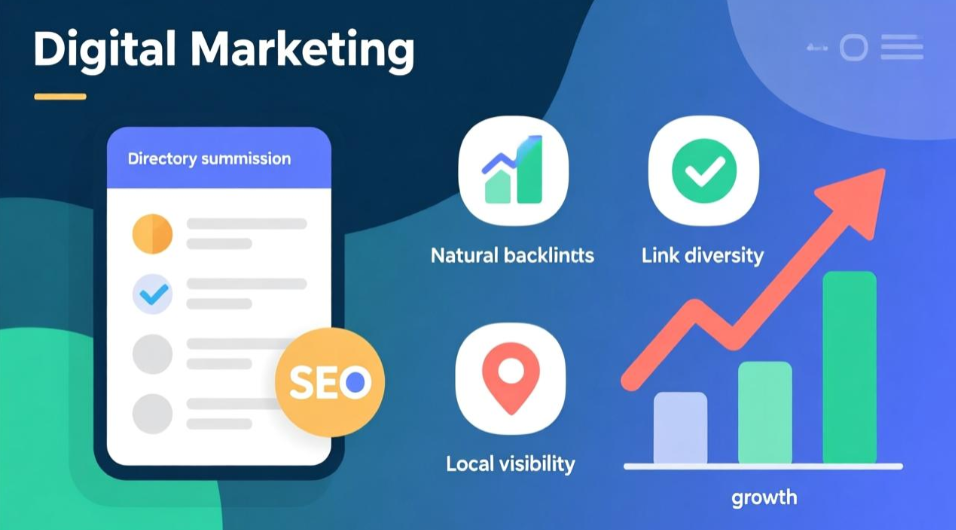
In fact, modern SEOs use it to:
- Build foundational backlinks
- Strengthen link diversity
- Improve off-page SEO signals
- Increase local visibility
- Drive real user traffic
And here’s the interesting part…
Google LOVES natural links.
Directory submission provides exactly that.
How to Do Directory Submission the Right Way
Want results?
Follow this proven digital marketing approach.
Step 1: Prepare Your Business Details
Include:
- Business Name
- Website URL
- Description
- Social links
- Phone Number
- Logo
Keep information consistent everywhere.
Step 2: Choose the Best Directories
Use the selection criteria we discussed.
Step 3: Submit to Niche and Local Directories First
These bring the highest SEO value.
Step 4: Avoid Duplicate Descriptions
Google hates duplicates.
Rewrite your description for each directory.
Step 5: Track Your Submissions
Maintain a sheet with:
- Directory name
- URL
- Status
- DA
- Paid/free
Professional digital marketers never skip this.
Step 6: Check If Your Link Is Indexed
Use Google’s site: search operator after a few days.
Step 7: Focus on Quality, Not Quantity
100 high-quality directories
1000 low-quality spam directories.
Things to Avoid in Directory Submission (Critical Mistakes)
Want to protect your off-page SEO?
Avoid these deadly mistakes:

1. Submitting to Spammy Directories
Low-quality sites hurt rankings. Low-quality or spam-filled directories can damage your site’s authority and lead to ranking drops.
Always choose high-DA, trusted directories to protect your Off Page SEO.
2. Submitting Irrelevant Websites
Relevance is EVERYTHING in digital marketing.
Relevance matters more than quantity—links from unrelated directories offer no SEO value and may weaken your backlink profile. Stick to directories that match your industry or niche.
3. Using Automated Submission Tools
Automation = spam
Spam = penalties
Simple.
Automation creates spammy, low-quality submissions that Google easily detects.
This can lead to penalties, deindexing, or a weakened backlink profile.
4. Ignoring NAP Consistency
Your Name, Address, Phone must match everywhere.
Your Name, Address, and Phone (NAP) must be identical on every directory. Inconsistencies confuse search engines and hurt local SEO performance.
5. Overusing Exact-Match Keywords in Anchor Text
Using the same keyword repeatedly looks unnatural and triggers Google’s spam filters. Use branded or natural anchors to keep your link profile safe.
6. Using Duplicate Content
Rewrite descriptions. Always.
Copy-pasting the same description across directories reduces quality and indexing potential. Always rewrite, customize, and optimize your listing content.
7. Not Tracking Submissions
You can’t optimize what you don’t measure. If you don’t monitor where you’ve submitted, you can’t measure results or fix issues.
Tracking helps improve your Off Page SEO strategy and avoid repeated or failed submissions.
Conclusion: Is Directory Submission Still Worth It in Digital Marketing?
Absolutely—when done right.
Directory submission is not a magic trick…
It’s a foundational off-page SEO technique that strengthens your digital presence, boosts authority, and builds long-term credibility.
So, ask yourself:
Why ignore a simple strategy that can give your digital marketing efforts a powerful SEO advantage?
Start with high-quality directories.
Prioritize relevance.
Avoid spam.
Track results.
And if you truly want to master directory submission along with the complete off-page SEO ecosystem, DSOM (Dehradun School of Online Marketing) teaches these strategies with real, practical execution—helping students apply techniques that actually work in today’s SEO world.
Your digital marketing success depends on strategic action—directory submission is one of them.